
Extinction Events
When something - or someone - ends earlier than expected, we can feel unmoored. Crying, yelling or feeling all the feels with our communities takes the edge off

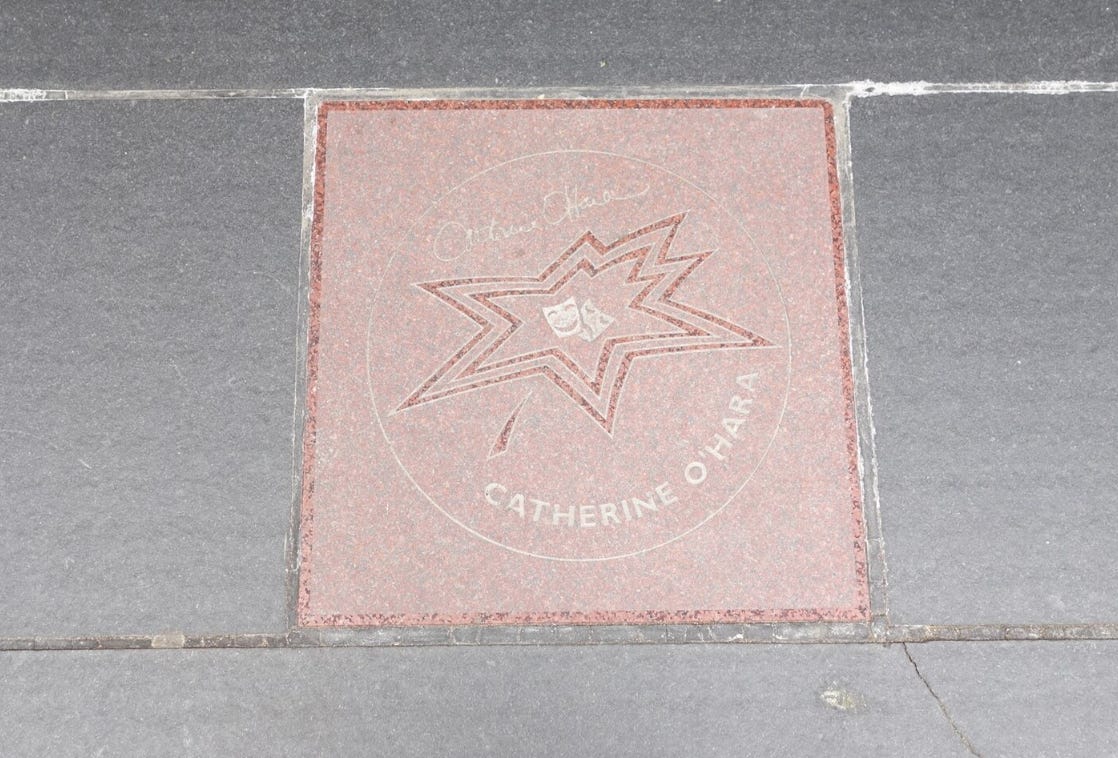
If you were to check out the text logs on many Canadians’ phones from the afternoon of Jan. 30, there would be a lot of weepy-face emojis. You’d see notes like, “Oh nooo!” and “I can’t believe it!” and “This is just so very sad,” pinged between friends and family groups.
My most-used gif has long been Moira Rose raising her fist in the air and saying, “Courage!” So that’s the one I forwarded to my loveys that day. Catherine O’Hara’s death was, for many of us, one of those sadness-out-of-a-blue-sky events that collectively knocks a person down when they least expect it.
Was there anything any one of us could say that would make someone else feel less lousy? Not really? But there was at least a sensation that we weren’t alone with our feelings. We were all stunned and unmoored together.
Most of us didn’t know O’Hara outside of the characters she played on our screens. (If you did meet her or see her live on a stage, I’m sure we’d all love to hear about it.) So we’re all sharing our collective mourning from afar.
However, when news of a death - or the possibility of impending death - shows up, the share-urge is real and important. The crying, yelling, head-shaking or resisting we do can’t happen effectively without our communities. We need our fellow hive members.
Over the last few months, far too many Ottawans have had practice reaching out to each other about extinction-level events in their lives. Not news about loss of life - although my sincere condolences if you have indeed experienced that kind of loss - but about the loss of jobs, departmental teams and potentially careers.
At the moment, 24,000 public servants have been told their jobs may be cut. Then there are the 59 personal support workers, housingkeeping and kitchen staff at the Perley Health long term care home on Russell Road who have been notified that they’re being laid off. Over at the Canadian Museum of History and the Canadian War Museum, dozens of positions are being axed. And more.
At Algonquin College, 30 programs are being put forward for closure to the board of governors at their Feb. 23 meeting. Last year they voted to shutter 37 other programs. These cuts don’t just come with job losses at the college, they affect employment sectors who hire grads, would-be students, graduates and the wider community’s ecosystem.
[Full disclosure: the program I co-coordinate at the college, journalism, is also on the recommended shut-down list. You can read about our situation in the Ottawa Citizen on Jan. 30.]
Whether you’re a worker in one of these affected areas or you’re a friend, family member or colleague of an affected human, being included in a distress-text thread means you’ve got a ring-side seat to some big emotions. For many of us, the sensations of disbelief, sadness and anger can be overwhelming at times.
My colleague at the college, Colin Mills, knows these sensations all too well. In fact, when Mills received the email on Jan. 22 informing him that the Music Industry Arts program was up for suspension, “it was the heartbreak of my life,” he says.
As the program’s coordinator and founder, Mills has given himself over to its success for almost 20 years. “I love everything I do,” he says. “I love the stupid, boring admin work. I love interacting with the registrar’s office and the admin people that I talk to on a daily basis. Other faculty, I love. There’s not one part of my job I don’t like. I thought I would be carried out of here in a box.”
What’s helping him along just now is the incredibly supportive response the program has received from the wider Ottawa community. The Ottawa Music Industry Coalition has published an open letter to the Board of Governors setting out the program’s economic and cultural imperative to the region. Community members are meeting, gathering research and data and speaking about the program’s essential value. Current students have started a petition that had 2,295 signatures at last count.
“I really think if that wasn’t happening, I would have probably shut down,” he says. “But it’s really sort of given me some hope, and it sort of kept me alive. Even if it’s not successful, I know that those people are there and that they’ve done everything that they can, and the support was there.”
For anyone else facing a loss just now, at the college or around town, Mills suggests that people reach out to the folks around them. The instinct to turtle may be real. But not one of us is alone. “You don’t know that that community is there until you need them,” he says.
In my case, I experienced this lousy lesson early, alas. My very first workplace extinction event happened in 1994 when I was a 19-year-old camp counsellor working out a sleepaway camp in Dunrobin. Enrollment was down for the last few weeks of the summer, so management announced they were wrapping up the show early.
My co-workers and I yelled at the sky together. We cried, we argued our case to our bosses (unsuccessfully) and we dreamed up new camps we’d someday run together. Our youthful hearts imagined that no one could possibly feel the deep, profound sorrow that we all felt. How could the powers-that-be have made such a cruel, community-destroying call?
Then we all went on a road trip to Wonderland. We were young adults, after all - death of any kind was new to us all. And within a few weeks we returned to our normal, non-camp post-secondary lives.
But the lesson I took from all of this - and the one I’m taking from where I am just now - isn’t the futility of the effort. Or a cynicism that nothing can change. But that feeling miserable, mad, numb and then hopeful with other humans in the face of an end, has value.
It turns out that 1994 was, coincidentally, also the year that Catherine O’Hara herself gave us all some excellent advice for trying times. In her eulogy for her friend John Candy at his memorial service she set out what he’d meant to each of them. “Privately we have our own memories, and together we have so much else,” she said.
❤️
I loved this post Julie. And I hope your program survives. ~Kerri
Thanks for all you have done, and continue to do, to advance the vital importance of community, connection and communication. So grateful for J-school, as are so so many other, and I remain hopeful that the Board of Governors will keep it running.